


Topical Steroid Withdrawal Is 100% Preventable

What Is Topical Steroid Withdrawal? (Also Known as Topical Steroid Addiction)
Topical Steroid Withdrawal (TSW) is not eczema — and in the words of my five-year-old, it’s “a zillion times worse, plus a few.”
TSW is the body’s severe rebound response after stopping topical steroids that were meant to be therapeutic. These prescriptions often work at first… until they don’t. And when they stop working, the reaction that follows can be catastrophic.
How People End Up in Topical Steroid Withdrawal
Here’s the typical story:
You go to your doctor for eczema.
You’re given a topical steroid.
It helps — for a while.
Then the flare returns, often worse.
The solution? You’re told your eczema is “just really bad,” so you’re prescribed a stronger, more potent steroid. When that stops working, the next step is an even stronger one — until eventually, oral steroids like prednisone enter the picture.
But at what point should someone warn you that steroids can actually cause a worsening of symptoms?
Where Is the Warning? It’s Right on the Box…
Topical steroids clearly state on the packaging:
Do not use longer than two weeks.
Yet many people have been prescribed steroids for years — even decades.
Why?
Because if your doctor says it’s okay to continue, that reassurance tends to override the printed warning. But long-term use was never meant to be “safe.” When a lower-potency steroid stops working, physicians often escalate to a higher potency formula. And if that fails, prednisone is often the “last resort,” despite its own major risks.
A Real Example: Jess’s Story
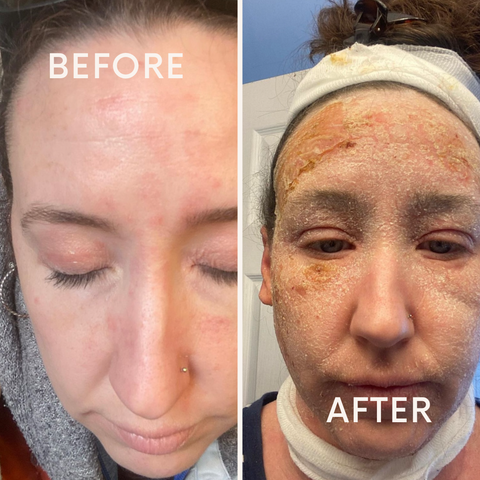
In the case of the photos referenced in this blog, Jess was prescribed Clobetasol — the most potent topical steroid available, roughly 600× stronger than the lowest potency steroid.
She was prescribed this over the phone, without being physically seen.
Later, even when a dermatologist briefly assessed her in the hospital, they still refused to acknowledge Topical Steroid Withdrawal, despite clear symptoms of Red Sleeve Syndrome — a hallmark sign of TSW that looks nothing like eczema.
A quick image search will tell you instantly:
TSW and eczema do not look the same.
Who Is Supposed to Protect Patients From Overprescribing?
As a nurse, I can tell you:
Pharmacists are supposed to be the safeguard.
But we’ve already seen how well that system has worked for benzodiazepines and opiates — which is to say, not well at all.
So who is monitoring doctors who:
-
Ignore the 2-week usage warning
-
Prescribe steroids long-term
-
Escalate potency for years
-
Overlook obvious withdrawal symptoms
The reality? No one is truly regulating this. And patients are suffering the consequences.
Why the Warning Exists
Someone, at some point, knew there were risks.
That’s why the 2-week warning exists in the first place — long before TSW was widely acknowledged.
Steroids can mask symptoms while worsening the underlying issue. Doctors often misinterpret worsening skin as “poorly controlled eczema,” leading them to prescribe stronger steroids rather than question the treatment itself.
Many patients discover the truth only when they, or a desperate parent, realize the steroid is the problem — not the solution.
And when they stop?
The body unleashes a tidal wave of withdrawal symptoms far worse than the original condition.
What Can We Do to Help?
Awareness matters. Visibility matters. These stories matter.
You can:
-
Follow TSW survivors
-
Share their posts
-
Recognize the symptoms
-
Advocate for safer prescribing
-
Support those going through the journey
Instagram Accounts Spreading Awareness
@smileyj_tsw_journey
@tsw.journey.with.evianne
@tswjourney.rena
@tswbella
Helpful Links to Learn More
https://www.itsan.org
https://www.gov.uk/government/news/long-term-continual-use-of-topical-steroids-linked-to-skin-withdrawal-side-effects
https://www.youtube.com/watch?v=GuaBbsL1qKA


